Private-label laundry pods: shapes, scents and packaging
Build a clear private-label laundry pod brief: choose a pod reference, compare fragrance samples, review packaging and send a quotation-ready enquiry.

A laundry pod range can start with a recognisable shape, a distinctive scent and a pack that suits the retail shelf. For private label laundry pods, the most useful first step is to make those three choices separately, then bring them together in a clearly identified sample. That gives a wholesaler, retailer or OEM/ODM buyer a proposal they can compare, revise and quote.
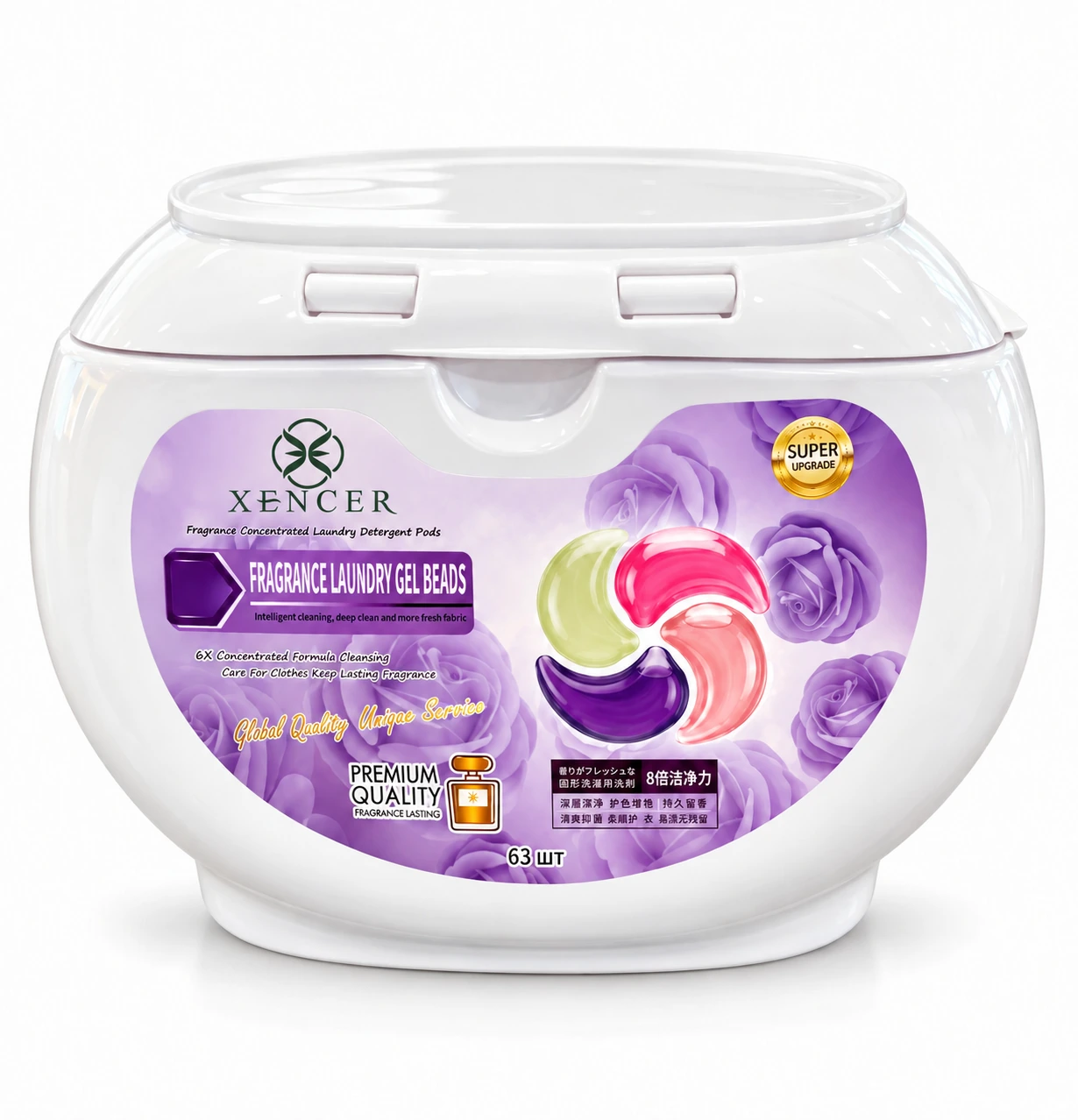
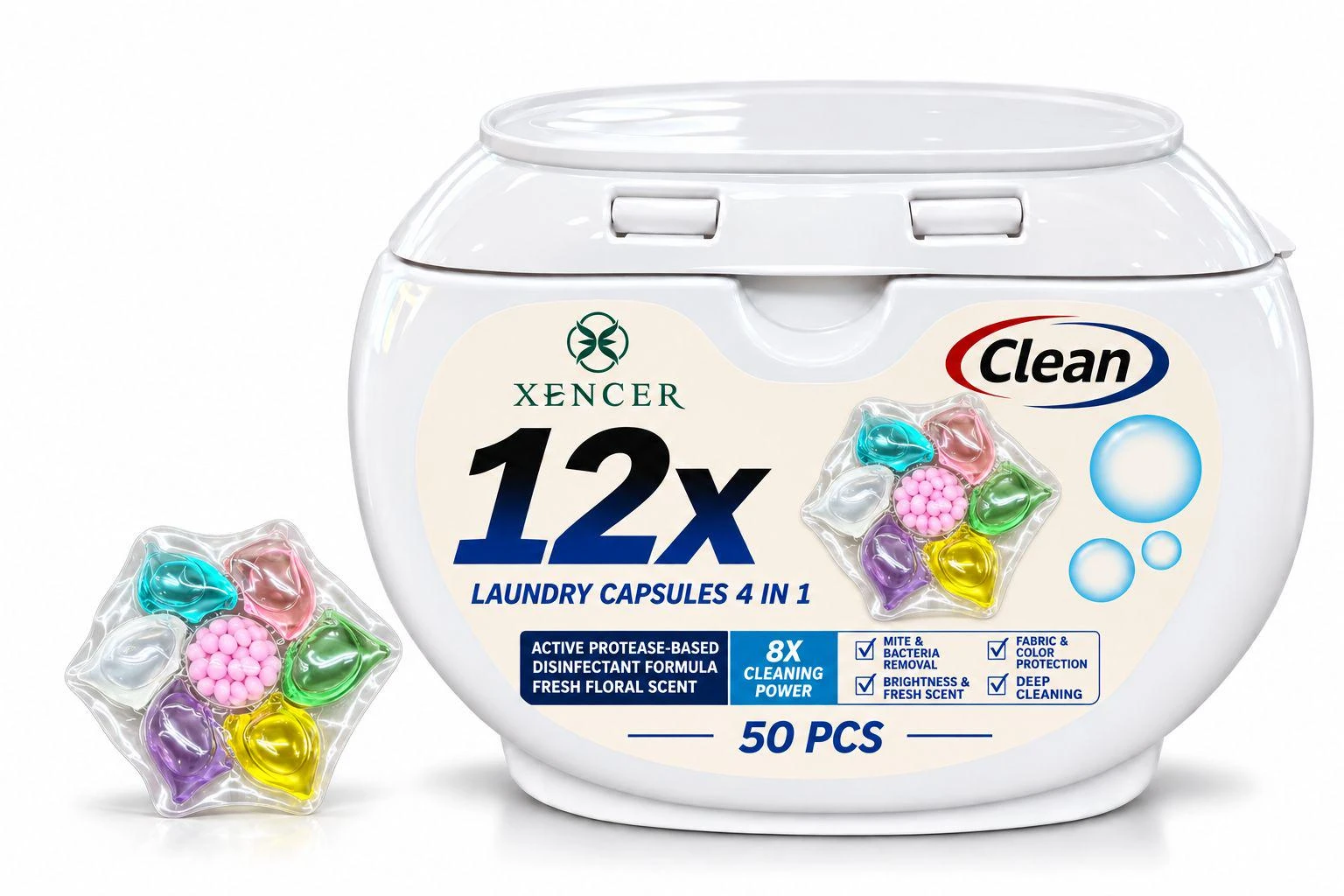
XENCER’s laundry capsule catalogue includes different shape and colour references, with fragrance and packaging options to discuss for a project. Use a product SKU to identify the visual direction, then add the scent brief, packaging reference and required quantity. A photograph alone leaves too many commercial decisions open.
1. Choose a pod reference before approving the formula
Select two or three catalogue references that fit your proposed range. A compact rectangular pod and a multi-compartment design can create very different shelf presentations. Record the SKU and preferred colour combination so the supplier knows exactly which visual you mean. If you want to change a colour or shape, ask what can be proposed rather than assuming the catalogue image is editable without development work.
Keep the appearance decision separate from the formulation brief. Chamber count, colour and shape do not establish cleaning performance, fragrance duration or fabric suitability. Ask for the proposed sample reference, intended use, dose and supporting information for any claim you want to put on the finished pack.
2. Define what convenience means for your range
Pre-portioned detergent is an appealing way to simplify a laundry routine. Buyers can explain that format clearly without promising that every pod replaces every separate laundry product. Whether a proposal combines cleaning, softening or fragrance functions depends on the selected formula and the evidence supporting its directions.
For a sample request, describe the benefit you want to develop: simpler dosing, a particular fragrance experience or a coordinated retail range. Ask the supplier to identify which functions are included in the proposed formula. The number of pods for a wash must follow that product’s instructions and conditions; one pod should not be presented as a universal dose for every load.
3. Turn a scent preference into a sample brief
A fragrance direction is easier to discuss when it includes a reference and a review method. “Fresh floral” or “soft woody” can be a starting description, but neither is a finished specification. Send the reference you like, state whether the impression should be light or pronounced, and ask which sample options can be prepared for assessment.
- Give each fragrance trial a sample code and keep it linked to the pod formula and version.
- Review samples using the same agreed wash, fabric and drying conditions; record the conditions with your observations.
- Separate the impression when opening the pack from the impression on washed and dried fabric.
- If long-lasting fragrance wording matters to the launch, request evidence for the selected formula before approving that wording.
4. Choose packaging around the filled product
A packaging reference is a starting point for a conversation about format, count and handling. Ask which options are available for the selected pod and order quantity, then review a filled sample with the intended closure. The following formats are discussion options, not a list of confirmed stock specifications.
| Format to discuss | Buyer question | What to confirm in the sample |
|---|---|---|
| Tub or bucket | How will the pack fit the shelf and be opened and closed? | Filled dimensions, closure operation, count, label area and required safety assessment. |
| Resealable pouch | Can the selected material and closure protect this product through its intended use? | Compatibility, moisture protection, resealing, printed directions and pack checks. |
| Carton with an appropriate inner pack | Which component contains and protects the pods after opening? | Inner-pack specification and closure, outer artwork, protection and the complete packed sample. |
Agree the number of capsules per pack separately from the pack’s external size. Ask for the proposed capsule weight, filled net content, outer carton quantity and carton dimensions. Those details make it possible to compare offers on the same basis and plan a shelf or shipment without relying on the apparent size of a photograph.
Keep pack count and wash count distinct. A 30-capsule pack does not automatically support a 30-wash claim under all conditions. Compare a quotation per capsule and per pack first; any cost-per-wash calculation needs the selected product’s dosing instructions and clearly stated assumptions.
5. Build safe handling into the pack review
A.I.S.E.’s Keep Caps from Kids safe-use guidance advises dry-hand handling, retaining capsules in their original packaging, closing the pack properly and keeping it away from children. It also recommends closing the pack immediately after taking out a capsule.
For a buyer, this makes the closure, instructions and storage information part of the pack decision. Review them with the actual filled pack, rather than approving a container from its appearance alone. Decorative restocking jars seen in social content should not replace the original product packaging. Ask what assessment supports the proposed pack and any specific safety wording; a supplier photograph is not proof of a certified closure.
6. Keep one approval record for the complete proposal
Bring the decisions together in a short approval sheet. Where a detail is still open, leave it visibly open and give it an owner. This is particularly useful when different people review the scent, artwork and commercial quotation.
| Decision | Record to keep |
|---|---|
| Product | SKU or shape reference, colour, formula/sample version and proposed directions. |
| Fragrance | Trial code, chosen reference and recorded review conditions. |
| Pack | Packaging code, material and closure proposal, capsule count and filled sample version. |
| Artwork | Brand, destination language, directions and claims to substantiate before release. |
| Commercial scope | Quantity per variant, units per carton, delivery basis and items included in the quotation. |
| Open points | Pending information, responsible person and the sample or document needed to close each point. |
Send a brief that can be quoted
A useful first enquiry does not need a completed technical specification. It needs enough structure for the supplier to ask the right questions and prepare a comparable proposal. Copy the fields below, then attach your preferred pod and packaging references.
- Destination country and sales channel.
- Selected pod SKU(s) and preferred colour direction.
- Fragrance brief and any scent reference you can provide.
- Preferred packaging format or reference code, plus capsule count per pack.
- Estimated quantity per variant and sample requirements.
- Required label language, proposed claims and questions still to resolve.
Browse the XENCER laundry capsule references and send your SKU, scent direction, pack preference and quantity through our enquiry page. We can use those selections to discuss the project scope and the details that need confirmation.
Research context
Our November 2026 review of 20 public Instagram and TikTok hashtag results did not verify a post published in the preceding 30 days. Older examples included a disclosed Instagram affiliate refill promotion and a TikTok comparison of pod shapes and colours. They informed the questions in this guide, not a claim of current popularity. European demand and keyword search volume remain unknown; the topic follows buyer briefing needs and XENCER’s laundry capsule focus.